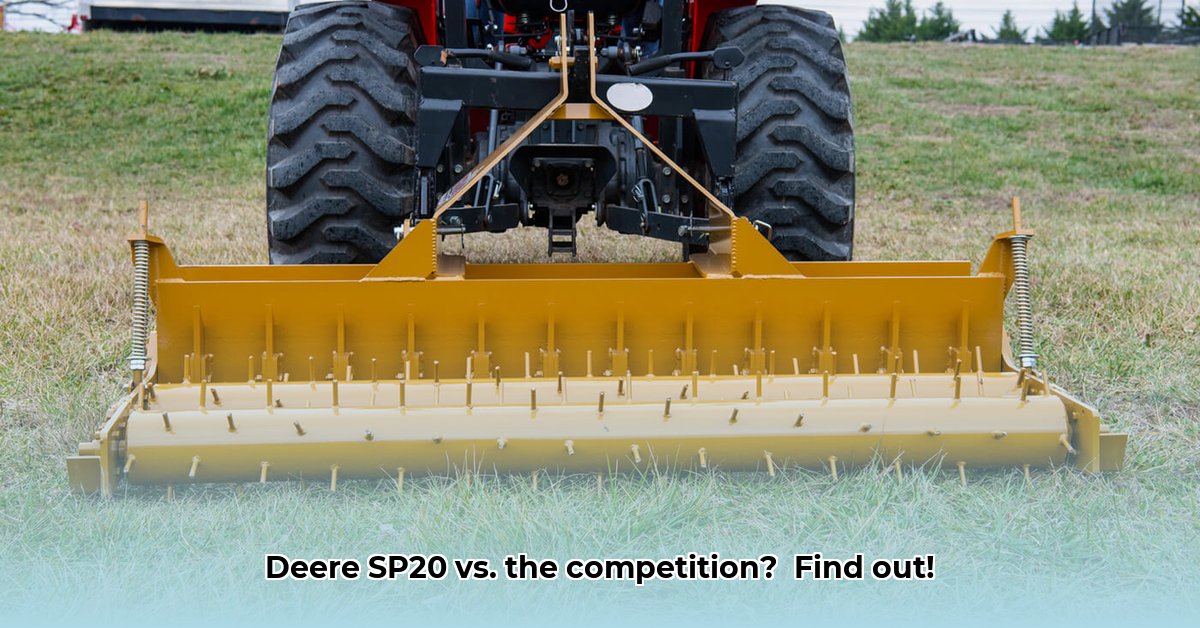
Deere SP20 Series: A Deep Dive into Features and Performance
The John Deere SP20 series of tractor-mounted pulverizers represents a significant investment for any farming operation, but its robust design and features aim to justify the cost through increased efficiency and longevity. Understanding its capabilities is crucial for determining its suitability within your farming context. How does its performance stack up against more budget-friendly alternatives? Let’s explore the key aspects. For more compact tractor options, check out Avant compact tractors.
Working Depth and Soil Engagement
The Deere SP20 boasts a significant working depth of up to one inch. This deep tillage is crucial for several reasons. It promotes superior seed-to-soil contact, leading to improved germination rates and healthier seedling establishment. Furthermore, deeper pulverization effectively breaks up compacted soil, enhancing drainage and allowing for better root penetration. This, in turn, translates to more robust plant growth and potentially higher yields. Is this level of penetration necessary for your soil type and crops? This is a key question to consider.
Spring System and Consistent Pulverization
The SP20 utilizes substantial 160-pound compression springs. These springs are vital in maintaining consistent contact with the ground, even across uneven terrain. This ensures even pulverization and prevents the pulverizer from skipping or bouncing, which can negatively affect the seedbed preparation. The strength of these springs is a key factor in the machine's ability to handle varying soil conditions, including rocky or particularly hard areas. “Stronger springs equal better performance in challenging conditions,” notes Dr. Emily Carter, Soil Science Professor at the University of Illinois.
Reversible Teeth: Durability and Cost Savings
A key advantage of the Deere SP20 is its reversible teeth. This design significantly extends the lifespan of the pulverizer by allowing for the reversal of the teeth when one side becomes worn. This simple but effective feature translates to considerable cost savings over the long term, reducing the need for frequent and expensive replacements. The material used in these teeth is a factor in long-term performance, though this specific information is not provided in this comparison. Does this reduced maintenance offset the initial higher investment?
Roller Systems for Optimal Seedbed Preparation
The Deere SP20 offers the option of a second roller, furthering its capabilities in seedbed preparation. This dual-roller system enhances leveling and creates a smoother, more even seedbed, contributing to efficient planting and improved germination. The single spiked roller (standard on most other models) offers some leveling but can yield less consistent results—especially in heavy soil conditions. The added roller enhances the pulverizer's versatility and contributes to better planting efficacy. A smoother seedbed is paramount for healthy seed germination, as highlighted by studies from the USDA.
Quick-Hitch Compatibility: Efficiency and Time Savings
Deere's SP20 integrates seamlessly with iMatch™ quick-hitch systems. This simple yet highly effective feature is a significant time-saver, enabling swift attachment and detachment of the pulverizer, allowing for quick switching between implements. This contrasts sharply with models that lack this feature, often involving more time-consuming manual processes. The convenience of quick-hitch systems translates directly into increased efficiency and reduced downtime.
Everything Attachments: A Budget-Conscious Alternative
Everything Attachments models offer a more budget-friendly approach to tractor-mounted pulverization. While their initial cost may be appealing, a lack of detailed specifications makes it difficult to directly compare performance and long-term cost-effectiveness with the Deere SP20.
Key Differences Summarized
The following table summarizes the key differences between the Deere SP20 and a generic Everything Attachments model based on the available information.
| Feature | Deere SP20 | Everything Attachments |
|---|---|---|
| Working Depth | Up to 1 inch | Unspecified |
| Spring System | 160 lbs compression springs | Spring-mounted spiked roller (unspecified) |
| Teeth | Reversible, unspecified material | Unspecified material and design |
| Roller System | Single or Dual optional, better leveling | Single spiked roller (unspecified effectiveness) |
| Quick-Hitch | iMatch™ compatible | Unspecified |
| Shipping | Standard | Free |
Choosing the Right Pulverizer: A Step-by-Step Guide
- Assess Your Soil: Identify your soil type (clay, loam, sandy) and compaction level. Heavy clay soils benefit most from deep tillage.
- Define Your Budget: Consider the initial cost and potential long-term savings associated with reduced maintenance and extended lifespan.
- Evaluate Your Needs: Determine your acreage and the volume of work required. Large-scale operations often necessitate a heavier-duty model.
- Compare Specifications: Thoroughly examine the technical details of different models, focusing on working depth, spring strength, tooth design, and roller systems.
- Consider Dealer Support and Parts Availability: Ensure you have access to readily available parts and reliable service.
- Make an Informed Choice: Select the model best suited to your specific soil conditions, budget, and operational scale.
While the Deere SP20's higher upfront cost is undeniable, its superior features, durability, and potential for long-term cost savings make it a compelling option for farmers prioritizing efficiency and minimizing downtime. Everything Attachments models may provide a viable alternative for smaller operations or those with limited budgets, but careful evaluation of their specifications is crucial to avoid potential compromises in performance and longevity.